
[ezcol_1third]
Click on green “+” to open each window.
[stextbox id=”download” caption=”Where From?” color=”000000″ ccolor=”ffffff” bgcolor=”78c0f7″ cbgcolor=”2e7cb9″ bcolor=”fde97d” ]The Durian Thorn talisman is from Menrod Village, Orang Asli Temiar Tribe, Gua Musang, Kelantan, Malaysia
[/stextbox][stextbox id=”download” collapsed=”false” caption=”Where Now?” color=”000000″ ccolor=”ffffff” bgcolor=”78c0f7″ cbgcolor=”2e7cb9″ bcolor=”fde97d”]Track where in the world the Durian Thorn talisman is now and its previous journey from person to person.

THIS TALISMAN HAS NOT YET BEEN RELEASED!
Click here to request this talisman.
[/stextbox][stextbox id=”download” caption=”Write About It” color=”000000″ ccolor=”ffffff” bgcolor=”78c0f7″ cbgcolor=”2e7cb9″ bcolor=”fde97d”]Durian Thorn Talisman has its own Facebook group!
Read about people’s experiences with this talisman as it travels from person to person.

group not yet active
[/stextbox][/ezcol_1third]
[ezcol_2third_end][stextbox id=”download” color=”000000″ bgcolor=”78c0f7″ bcolor=”2e7cb9″]
TALISMAN #59: DURIAN THORN
The Durian Thorn talisman has the power to help show you the double power of the Nature Spirit, the power to heal when embraced and the power to fight back when abused — ultimately to help you re-connect with the Spirit of Nature.
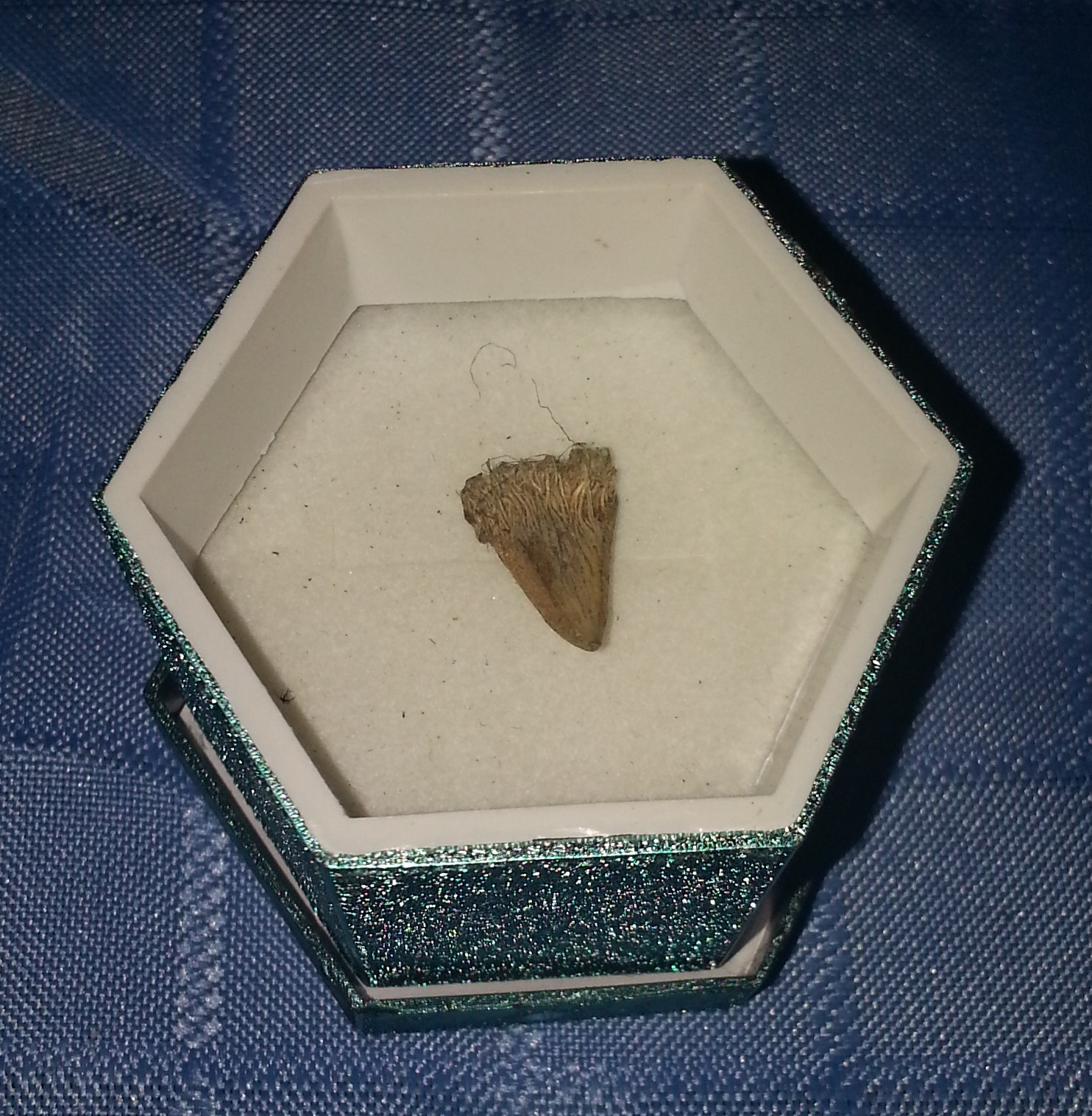
THIS TALISMAN IS STILL AVAILABLE.
Click here to request this talisman.
[/stextbox]
[/ezcol_2third_end]
The Temiar people are one of the largest of the 19 Orang Alsi (indigenous/original people) tribes of Malaysia.
They are traditionally animists, giving great significance to nature, dreams and spiritual healing.
A series of auspiciously amazing synchronicities led that I was able to spend some time in the Malaysian jungle with several Orang Asli tribes. A village shaman (medicine man/ healer) is called hɑlɑʔ. I was so lucky that I, not only got to spend a considerable amount of time with an Orang Asli hɑlɑʔ, but that he, amazingly, also spoke English quite well.
In this recording, I discuss with a shaman (medicine man/ healer) from the Malaysian jungle about the Orang Asli’s (indigenous/ original people) intimate and complex relationship with the Spirit of Nature.
Firstly, I would like to excuse the “seemingly” poor quality of the sound. What is most strange and mysterious is that during the session, there was no distracting sound. It was rather quiet. Instead, we can hear what sounds like a lot of distracting banging in the background. In fact, at times it is so loud that I have tried to edit most of it out. But here is the real mystery: if you pay close attention, you will hear the shaman present himself as the specific type of shaman (hɑlɑʔ) that he is. He says that he is connected with the Tiger Spirit and that wherever he goes, the Tiger Spirit follows. In fact, he goes so far as to say that, if necessary, he is able to transform his actual physical body into a Tiger. What is most interesting is that, during the part when he says this, the background noise seems at its loudest, almost as though there is a caged up tiger that is pounding and banging. I have an eery feeling that the Tiger Spirit was with us the entire time. How and why I could not hear it while I was there but that instead it came through in this recording, for now, will remain a mystery.
During our session together, I asked if there is something he could give me that could help the common Westerner reconnect with the Spirit of Nature. The family had offered me some Durian as soon as I arrived and it had been in front of me the whole time. In my explanation of The Talisman Challenge, I suggested that the talisman could even be something as simple as a thorn from the durian they had offered. The moment I picked it up, it pricked me. It quickly became evident to us all that this was the correct talisman, that it was alive and already communicating with me. Much of the discussion until then had been about the power of Nature and the destruction that happens (personally and collectively) when we disconnect and disrespect the Spirit of Nature. Simply put, there are consequences. As much as the Spirit of Nature can be powerfully healing and beautifully transforming, the consequences for disconnecting and disrespecting can be equally powerful and dreadful.
May this talisman help you to re-connect with the true Spirit of Nature and may it reveal to you the infinite power that it beholds.
BACKGROUND INFORMATION ON ORANG ASLI (indigenous people) TRIBES OF MALAYSIA
Information mostly taken from: http://www.drustvo-antropologov.si/AN/PDF/2011_3/Anthropological_Notebooks_XVII_3_Arabestani.pdf
The village shamans/ medicine men/ healers are called hɑlɑʔ, a medium that can communicate with and manipulate the spirit world. The Orang Asli liken the hɑlɑʔ to a physician who treats the sick, but with a holistic and alternative method. Orang Asli religion is an integral part of the culture, and it does not constitute a distinct set of ideas and practices. Hence, it can be said that it is an informal religion. This puts it as easy target for being swallowed up and dominated by the formal missionary religions of Islam and Christianity that are doctrinal religions, and whose adherents plan to spread their standardised beliefs and practices among diffused groups.
In the Orang Asli spiritual traditions, communication with the supernatural is delegated to hɑlɑʔ and through his mystical power and his spirit helper (guniĸ) he appeases the supernatural beings or even fights with them in the client’s favour. Basically, ‘hɑlɑʔ asks the ghost politely to release the soul [of the sick], if the ghost refuses, then hɑlɑʔ will ask his gunik to fight the ghost.’ In a sense, they also work as spiritual teachers and guides for the rest of the people. They simply have to concern themselves with being good respectful people, to one another and to Nature. Based on negative things (personal, and collective) that may come about, the hɑlɑʔ will commune with the Spirit world and advise (individually or collectively) what needs to change, morally and behaviorally.
Missionary religions, such as Christianity and Islam, show an innate inclination to expand their domain and extend the “truth” they hold to the other people. The Temiar people (along with other indigenous groups of Malaysia), have been subject to missionary activities by Christians since the 1930s, while the Islamic missions advanced when the government took a more active role in Islamic invitation (da’wah) in 1970s. They have been greatly affected by missionary activities, because they live in a country with Western colonial Christian background and dominant Muslim people. Whereas the Christian mission is non-governmental, the Islamic mission is backed by the government and is seen as a part of a plan for assimilation of the Temiar people into the dominant Malay (Muslim) community. If things continue in this way, the threat of identity extinction for the indigenous people of Malaysia is not only a possibility, but a very likely sad reality.
Temiar religion is an indigenous religion by definition. Belief in supernatural invisible beings is foundational to Temiar beliefs. For the Temiar, the world is full of spirits that in a way or another affect their life. Disease and misfortune are bound with spirits. This caused Temiar religion to be identified as animism.
Religion is not a distinct institution in Orang Asli society; instead, it is a loosely shaped collection of beliefs, taboos and practices that is an integral part of the culture. The people themselves often refer to their religion as adat, which is a Malay term for tradition and custom. Adat is woven into all aspects of Temiar life and thus does not have a distinct border. Components of adat include more than religious matters and encompass Temiar kinship system and the ideas of social and natural order.
Belief in supernatural invisible beings is always associated with a medium, or shaman (hɑlɑʔ), who is specialised in communicating with the supernatural and has the authority to direct supernatural power towards solving various difficulties of the group such as diseases.
Supernatural beings are hidden causes of diseases and by bringing about misfortune; they can punish both individuals and the group. Sometimes they are manifested in natural phenomena like thunder, reducing the unknowable complexity of the natural world by giving meaning to them. The most referred supernatural beings are ɲɑniʔ, which are bound supernatural beings that are associated with physical or even non-physical phenomena. ɲɑniʔ nku (spirit of thunder) and ɲɑniʔ kudʒru (spirit of gibbon) are examples of the ɲɑniʔ category. However, ɲɑniʔ behaviour in Orang Asli adat, mixing different categories of food (meat, fowl, aquatic animals and mushroom) is a taboo. The spirit of mixing immiscible foods that bring about severe to mild disease based on the quality and quantity of the mixed food’s consumptionis ɲɑniʔ Krentʃɑ. Nowadays, the Semai are more willing to explain this taboo in terms of food incompatibility, rather than the supernatural intervention.
In addition to ɲɑniʔ, there are other categories of supernatural beings in Orang Asli pantheon: the highest supernatural being is ɲenɑŋ or dʒenɑŋ, who is almost out of reach and does not interferes in everyday life; maĸliĸɑtor are assistants of dʒenɑŋ; ĸerɑmat are dwellers of the land and are associated with landscape features; and
penyaĸit, which includes human ghosts (kikmoi) and ghosts of non-human beings (ɲɑniʔ).
The dynamic nature of Orang Alsi beliefs are open to new concepts and apply them to its formation, which revolves around the
invisible beings and their connection to people’s life. It is easy for them to adopt concepts of spirits from other cultures, such as angels and spirits from another religion. For the Orang Alsi, the environment is full of invisible beings that are potentially harmful and are to be avoided. For example, gazing at a land feature with a strange shape such as a rock with unusual size or shape may evoke its spirit and cause harm to the observer. Graveyards are mysterious and dangerous places and must be approached with care and preferably in company with a hɑlɑʔ, to avoid any harm by kikmoi.
The spirit-medium, or hɑlɑʔ, is another major characteristic of Orang Asli religion. hɑlɑʔ works through the intermediary of a spirit guide called gunik, presumably from
Malay gundik (consort, concubine) In fact, the appearance of a gunik in one’s dream is the starting point of hɑlɑʔ career. A gunik is often a dead persons’ ghost (kikmoi), who had been a hɑlɑʔ himself. A hɑlɑʔ career is not hereditary but in most cases the kikmoi who appears in the dream is one of the dead relatives such as father, brother or father-in-law. However, other spirits also can be spirit guide of a hɑlɑʔ. In some cases, a hɑlɑʔ is in touch with more than one gunik. A hɑlɑʔ is usually regarded as the medium of the gunik. A hɑlɑʔ calls a gunik through the song s/he has been taught in dream, then the gunik possess the hɑlɑʔ, and thereafter whatever the hɑlɑʔ expresses will be the will of the gunik. Through possession and communication with the spirit world, a hɑlɑʔ has the ability to manipulate the supernatural in the client’s favour.
Healing and dealing with afflictions are the main job of a hɑlɑʔ and s/he performs this job through three strategies: medical herbs, incantations (jampi) and healing trance séances (sewɑŋ or kəbut). A hɑlɑʔ usually knows some medical herbs and prescribe them to the ill. The more important healing role of a hɑlɑʔ is the part that deals with the supernatural. Incantations or jampi are magical words and phrases heal certain diseases, cure relationships, or that are used for protection or to attract a partner. The most authentic jampi come from dreams.
The most typical work of hɑlɑʔ is to conduct healing séances, which are held indoors in the dark of night (kəbut or sewaŋ). The ceremony includes performing monotonous music by playing the tambourine and bamboo tubes, singing, and burning incense to facilitate the hɑlɑʔ’s communication with the supernatural, which leads to healing the ill. Singing usually lasts for two to three hours in darkness, but the timing is flexible depending of the participants’ zeal. The hɑlɑʔ sings and a background singer (usually his assistant) accompanies him/her in a higher octave. Meanwhile, the hɑlɑʔ (now possessed by the gunik) speaks to the ill and sprinkles water on participants as a blessing and heightening of spirituality. The séance’s atmosphere is charged with hysterical intensity aroused by resonant music of tambourine and bamboo tubes. After turning the lights on, the hɑlɑʔ continues the healing procedure by blowing in the head and affected organs of the client through certain leaves and herbs such as selbɔk and buŋa çæræk (çæræk flower). In that way, the curative power of the leaves strengthens the soul and heals the affected part. The clients usually feel an immediate relief that (besides the supernatural efficacy) can be caused by the cathartic effects of a long arousal ceremony.
Each village usually has one or in some cases more than one hɑlɑʔ. The villages with the majority of Muslims or Christians may not have any hɑlɑʔ but this does not
prevent the villagers to seek a hɑlɑʔ if necessary. A hɑlɑʔ is an independent agent, and there is not any kind of solidarity between them. There is no tradition of apprenticeship in the career and it is based on the personal call and often through a hereditary line. There are some hɑlɑʔ with a good reputation for their power and some of them are long remembered, with people recounting stories of their miraculous treatments. As a career mostly involved in illness and healing the hɑlɑʔ position is declining in Semai communityas access to medical services increases. However, the healing ceremony by the hɑlɑʔ is still an alternative to expensive medical treatments and the diseases that persist in spite of simple available medical treatments.
Orang Asli religion involves everyday needs of the local indigenous tribes, such as healing and cultivation, and is restricted to the people and landscape with no tendency to deliberate expansion. In other words, it is a worldview with its beliefs and practices situated in the environmental and socio-cultural sphere of the Orang Asli people with no organisational support. It can be said that the best word for this religion is the very Orang Asli term adat (custom) that shows the identificational function of the term as a property of the Orang Asli.
Leave a Reply